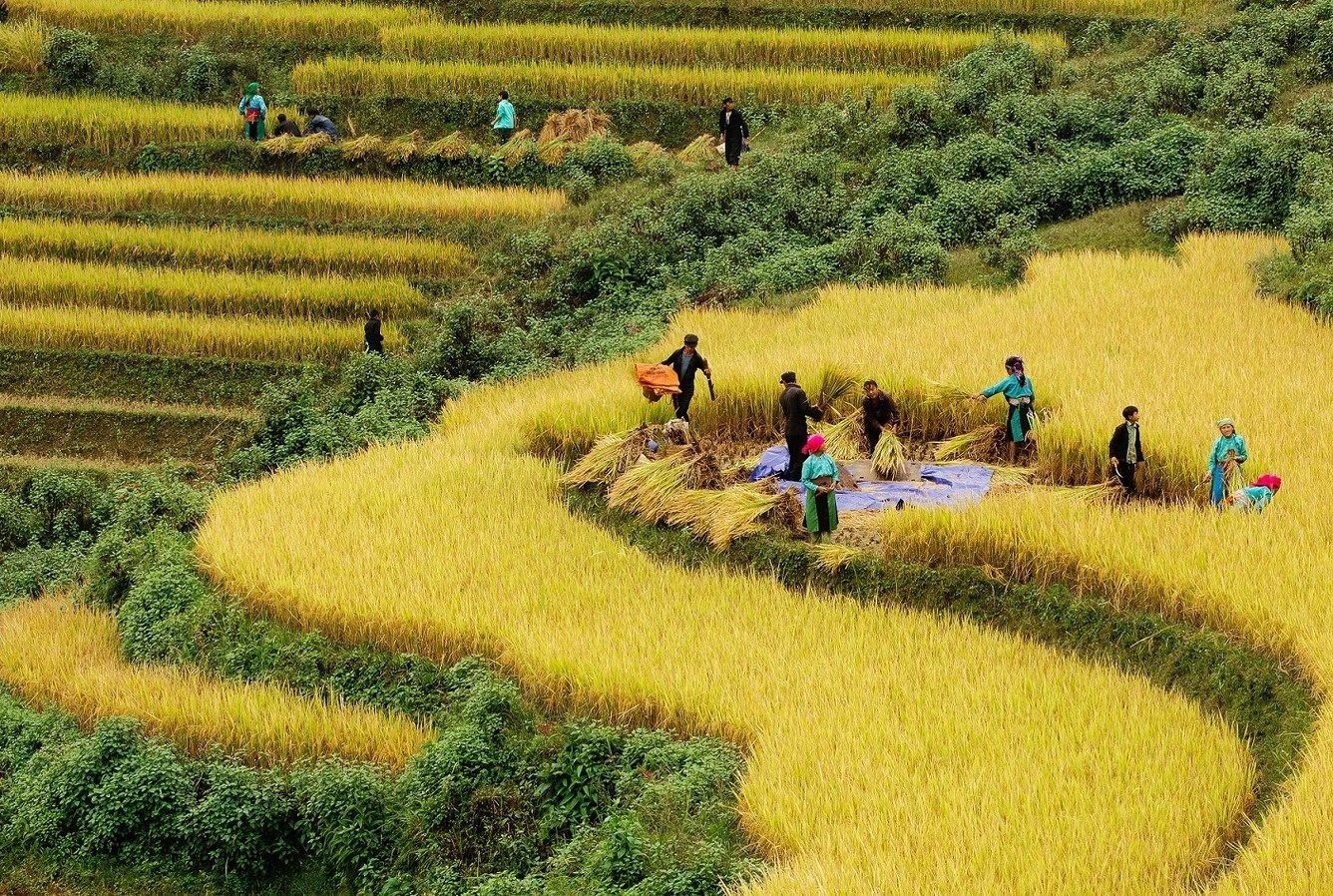
Over the past two decades, numerous Resolutions by the Central Party Committee, the National Assembly, and policy implementation documents by the Government concerning land for ethnic minority communities (EMCs) have been issued and implemented. The Land Law 2024 serves as a crucial legal framework to institutionalize the Party’s directions and guidelines, contributing to the realization of land policies for EMCs. This article focuses on analyzing several prominent points related to land policies for EMCs as reflected in the Land Law 2024 and some issues that need further clarification to bring these regulations into practice.
Institutionalizing Various Contents of Land Policy for EMCs
Compared to the Land Law 2013, Article 16 of the Land Law 2024 has concretized many land policies for EMCs. In addition to specifying clearer policies on allocating residential land, communal land, and agricultural land to ethnic minority individuals and communities, the Law also adds provisions such as:
- Leasing non-agricultural land (excluding residential land) for production and business, with exemptions or reductions in rent;
- Allowing the conversion of land use purpose to residential land within the quota, with exemptions or reductions in land use fees for ethnic minorities who are land-poor.
Article 16 of the Land Law 2024 also specifies the eligible subjects and policies for first-time land support and further allocation of residential and production land if they were previously allocated but still lack sufficient land.
Specifying Mechanisms for Creating Land Funds to Implement Land Policies for EMCs
The legalization of a mechanism for creating a land fund to implement land policies for EMCs is a very important new point compared to the Land Law 2013 and previous guiding documents. Specifically, Article 16 of the Land Law 2024 clearly states that land for implementing land policies for EMCs shall be allocated from the land fund managed by state agencies/organizations or from the land fund recovered by the State. Notably, Article 79 of the Land Law 2024 stipulates that land recovery projects to implement land policies for EMCs fall under the case of land recovery for socio-economic development for national interest. This regulation provides an important legal basis to help localities overcome mechanical difficulties when needing to create land funds to deploy land policies for EMCs.
Land Law 2024 Clarifies Responsibilities and Resources for Implementing Land Policies for EMCs
Article 16 of the Land Law 2024 clearly defines the responsibility of the Provincial People’s Committee (PPC) to submit to the same-level People’s Council for the issuance of local land support policies for EMCs residing in the area, aligning with local actual conditions, and to organize implementation. It also mandates the Communal People’s Committee to annually review and report to the District People’s Committee on cases where land is no longer available, insufficient, or non-existent for allocation or lease, thus providing a basis for preparing the annual district-level land use plan. Clause 3, Point b of Article 67 stipulates that the content of the district-level land use plan must include “Projects for arranging residential land and production land for EMCs (if any).” Including the Project for arranging land for EMCs in the annual district-level land use plan is an entirely new regulation and will significantly help localities overcome difficulties in implementing land policy for land-poor ethnic minorities in a planned manner. Furthermore, the Land Law 2024 explicitly states that funding to implement land policies for EMCs shall be allocated from the State budget and other legal capital sources as prescribed by law.
Besides the major changes presented above, the Land Law 2024 has also concretized many contents related to the order and procedures for land review, conditions for land allocation, lease, and issuance of Land Use Right Certificates (LURCs) relevant to EMCs. It also includes regulations on issuing LURCs in cases where land records are incomplete. These regulations are important guides to help resolve difficulties encountered by localities when implementing land policies for EMCs.
With these prominent policy regulations, the Land Law 2024 has created an important legal corridor and outlined relatively clear mechanisms and resources for implementing land-related policies for EMCs. However, to complete the system of guiding documents for implementation, the Law assigns responsibility to the Government and provincial-level authorities to develop specific policies and more detailed regulations to realize these policies. To resolve practical difficulties and ensure that EMCs can fully benefit from the policies and have stable livelihoods, the following issues need attention during the process of drafting related guiding documents:
First, Concrete Regulations on Specific Policies and Public Services are Needed to Stably Protect Land for EMCs
The Land Law 2024 mentions many regulations on allocating residential and production land to ethnic minorities but lacks detailed regulations to protect the LURs of EMCs. In reality, the situation where many ethnic minority households, who previously had land, sold it and became landless is quite common, especially among the Khmer and some areas in the Central Highlands. Statistical results from the Ministry of Natural Resources and Environment (MONRE) show that one of the main causes leading to landlessness or land shortage is selling off previously owned land, accounting for a high rate of 12.56%. The recurrence of land shortage due to land sales tends to increase in ethnic minority areas. Given the increasingly limited land fund, a policy that only prioritizes the arrangement of production land (first allocation and re-allocation) as currently drafted may be difficult to implement in reality and might not limit the recurrence of land shortage among EMCs.
Furthermore, there is a reality in some areas where ethnic minority people, after being allocated production land by the State under support policies, transfer the land to others. Especially noteworthy is the phenomenon of land mortgaging among EMCs to borrow capital for production or consumption. Although there are no official statistics, this phenomenon has been reported by some media agencies. For example, Binh Phuoc Newspaper (March 7, 2012) noted that in Bu Gia Map commune, Bu Dang district, 105 households mortgaged 166.8 ha of land for 16.952 billion VND. Dan Toc Newspaper (March 7, 2022) recorded that in Binh Thuan, the total area of land bought and sold was 720.84 ha involving 650 households. Alarmingly, the Land Law 2024 has expanded the limit for receiving land transfers and broadened the scope of subjects allowed to receive LUR transfers for production forest land and agricultural land. Loosening these restrictions will create additional land pressure in ethnic minority areas and increase the risk of land loss for ethnic minority people.
Among the many causes and consequences of the “recurrent land shortage” mentioned above, a fact highly worth noting is that EMCs do not fully grasp the regulations regarding the rights and obligations related to LURs and LUR transfer, leading to disadvantages during transfer processes. According to actual surveys with community members, only just over 50% of participants answered correctly about the rights of land users. The lack of legal information, insufficient awareness of land users’ rights and obligations, and the absence of legal consultation services for EMCs lead to risks for ethnic minority people in land conversion and transaction processes. Additionally, access to legal information and knowledge about land remains limited for EMCs in many places. According to 2019 statistics, nearly 20% of ethnic minorities are not fluent in reading and writing Vietnamese; this rate is especially high among some groups like the H’mong (45.7%) and the Lu (50.1%). In reality, this figure might be even higher in extremely difficult socio-economic areas. In this context, providing land and legal information solely in Vietnamese will limit the participation of some ethnic minority groups with high rates of (re-)illiteracy.
Given the limitations in accessing information and legal awareness among EMCs, as analyzed above, to ensure that EMCs can access and stably utilize land, specific and synchronized solutions are needed to help them both “have land” and “keep the land.” Many good practices for protecting LURs for vulnerable groups have been summarized and recommended by the United Nations. According to guidelines from the UN Committee on World Food Security and the Food and Agriculture Organization (FAO), to protect the land of ethnic minorities, the State needs to ensure “… the provision of services to all people, including those in remote areas. Services must be timely and effective, using technology and methods appropriate to the local context; simultaneously, the State and other stakeholders should consider additional measures to support vulnerable and disadvantaged groups in fully accessing administrative and judicial services related to land.”
The Land Law 2024 has mentioned the role of the State in providing land-related public services (Article 20. Contents of State management of land); legal assistance on land (Article 15. Responsibility of the State towards land users); and providing information in a manner suitable to the customs, traditions, and culture of each ethnic group and region (Article 18. Responsibility of the State in providing land information). These guidelines need to be concretized in guiding documents and regulations on land-related public services with specific mechanisms and measures suitable for local conditions. This includes forms of providing land information in local languages and suitable formats for ethnic minorities in difficult areas, as well as solutions to regulate land transactions and limit the acceptance of production land transfers from EMCs. These regulations aim to protect the land use rights of ethnic minority people. This will demonstrate the comprehensiveness and feasibility of the policy in Article 16 of the Land Law 2024, while ensuring EMCs’ access to and stable maintenance of land.
Second, Specific and Consistent Guidance is Needed to Update the Information System and Database on Land and Forests to Accurately Reflect the Current Land Use Status
In most areas inhabited by EMCs, their production land and livelihoods are largely associated with forest land. Currently, there are differences in the regulations regarding land use planning and forest use planning between the MONRE sector and the Ministry of Agriculture and Rural Development (MARD) sector in terms of standards and planning methods. Furthermore, limited coordination in implementation leads to data discrepancies between the two sectors. In reality, the land statistics data between MONRE and the current forest status records of MARD show significant discrepancies in many localities, especially in ethnic minority areas. This difference in data, the deviation between records and actual use, is a major, common obstacle when simultaneously allocating land and forests to EMCs.
One of the important land funds for implementing land policies for EMCs is the forestry land fund currently managed by forestry companies and Forest Management Boards. In most localities, the phenomenon of overlap and discrepancy in the boundaries between the land/forest managed by forestry companies and the area cultivated by local people on the ground is quite common but not fully reflected in the review records. Article 181 of the Land Law 2024 adds regulations on the use of land managed and used by agricultural and forestry companies; including provisions for recovering land from state farms and forestry enterprises to be handed over to local management and prioritized for allocation to EMCs. These regulations inherit, adjust, and elevate many contents stipulated in the Government’s Decree No. 118/2014/NĐ-CP on rearranging, renovating, developing, and improving the efficiency of agricultural and forestry companies in a stricter and more enforceable manner. However, there is still no specific requirement for the participation of the community and relevant stakeholders in the consultation and review phase of land currently managed by forestry companies. Besides, Article 181 of the Land Law 2024 also does not mention specific criteria or principles to guide the selection and determination of which land areas should be transferred back to the commune for re-allocation to the people. To ensure that the process of reviewing and handing over land and forests from forestry companies and Forest Management Boards to localities is conducted effectively, thoroughly, and definitively resolves the long-standing overlapping situation.
Thus, one of the solutions to overcome the “bottleneck” in implementing land policies for EMCs is to concretize the requirement for the participation of adjacent communities and local authorities in the process of reviewing the current status of land management, use, and forest protection by forestry companies. Specifically, the guiding decrees and circulars need to set forth specific requirements for the participation of the local people and local authorities in the bordering areas in the process of reviewing land managed by agricultural and forestry companies. Furthermore, clear criteria and specific principles related to historical and cultural aspects, current user/overlap status, location, and importance to the community need to be mentioned to guide the determination of which land area should be transferred back to the commune for re-allocation to residential communities and other entities.
Third, Specific and Consistent Guidance is Needed for the Order and Procedures of Integrated Land and Forest Allocation
Currently, the order and procedures for land allocation coupled with forest allocation are regulated in two separate legal document systems: land use management (Decree No. 43/2014/NĐ-CP and Circular No. 30/2014/TT-BTNMT) and forest management and protection (Decree No. 156/2018/NĐ-CP). There are still some inconsistencies between these two document systems in linking forest allocation with land allocation. There is currently no unified document between the MONRE and MARD sectors for both sides to implement integrated land and forest allocation. Moreover, the procedural regulations of both sectors mainly specify the rights and roles of state agencies starting from the commune level; the role and participation of hamlets and communities in the process of land and forest allocation are not addressed. Regulations on issuing LURCs to communities are also not detailed or complete. The Land Law 2024 has added some regulations on the conditions and procedures for land allocation for different cases and usage times; however, the regulations on issuing LURCs to the community are still not detailed or complete.
To ensure the effective implementation of these regulations for EMCs, it is necessary to review the guiding documents for land allocation (MONRE) and forest allocation (MARD), thereby making adjustments, amendments, and concretizing the contents to provide a general, consistent, and detailed procedural guide for integrated land and forest allocation. This guide needs to integrate principles and regulations to ensure community participation in all stages of the land and forest allocation process. For land allocated to communities or household groups, specific guidance is needed on records, procedures, assignment of responsibilities, mechanisms for community representation, and accountability mechanisms for community representatives to ensure effective management and protection of the forest, establishing a tight and harmonious link between the individual responsibility of the representative and the collective commitment of the community.
Fourth, A Major Central Policy with Specific Regulations and Strong Resource Investment is Needed to Encourage Land Readjustment Mechanisms in Ethnic Minority Areas Based on Community Consensus
Article 219 is a new point in the Land Law 2024, defining the contribution of land use rights and land readjustment, including cases of agricultural land concentration for production, projects for renovating and developing rural residential areas, upgrading rural roads, and implementing urban renovation and development projects. Article 219 also regulates the order, procedures, approval authority for the adjustment plan, and authority for issuing LURCs and adjusting records after implementing the land contribution and readjustment plan. In addition to the cases mentioned in Article 219, due to technical limitations during land and forest allocation at different periods, the current situation of deviation between records and actual use, overlapping, and undetermined land boundaries among land users is quite common in areas inhabited by EMCs. Therefore, the need for land adjustment and readjustment in ethnic minority areas is very large and urgent.
With the new regulations reflected in Article 219, their practical implementation will help resolve difficulties and obstacles encountered in reality to promote effective land use. Notably, in some localities, authorities have mobilized people to self-agree and implement land readjustment, including adjusting boundaries and landmarks to ensure consistency between actual use and land records. Some localities also apply this method to create a land fund to address land policy for land-poor EMCs. This form of land adjustment and readjustment receives high community consensus and is locally assessed as feasible. However, due to the lack of specific regulations, detailed guidance, and a general central policy, most localities have not boldly applied it but only implemented it on a very small, unsynchronized scale.
To resolve the difficulties caused by the discrepancy between records and actual use status, overlapping, and boundary disputes, many different professional stages are required. At the field implementation level, redefining the boundaries of each household involves many neighboring households; at the record and procedural processing level, this also involves many sectors and different levels, requiring large investments in funding, human resources, and technical expertise. Therefore, to completely solve this situation, it cannot be handled case by case but needs to be implemented within the framework of a central policy. In addition, more detailed guidance and monitoring mechanisms are needed to ensure authenticity and prevent cases of exploitation to legalize violations or profit from the policy.
Truong Quoc Can Director, The Consultative Institute for Socio-Economic Development of Rural and Mountainous Areas – CISDOMA